Government exits power buying: 1MW users first, 400MW up for auction
Awais Leghari says the state will no longer buy electricity and force it on consumers at set rates. The first phase covers consumers above 1 megawatt.
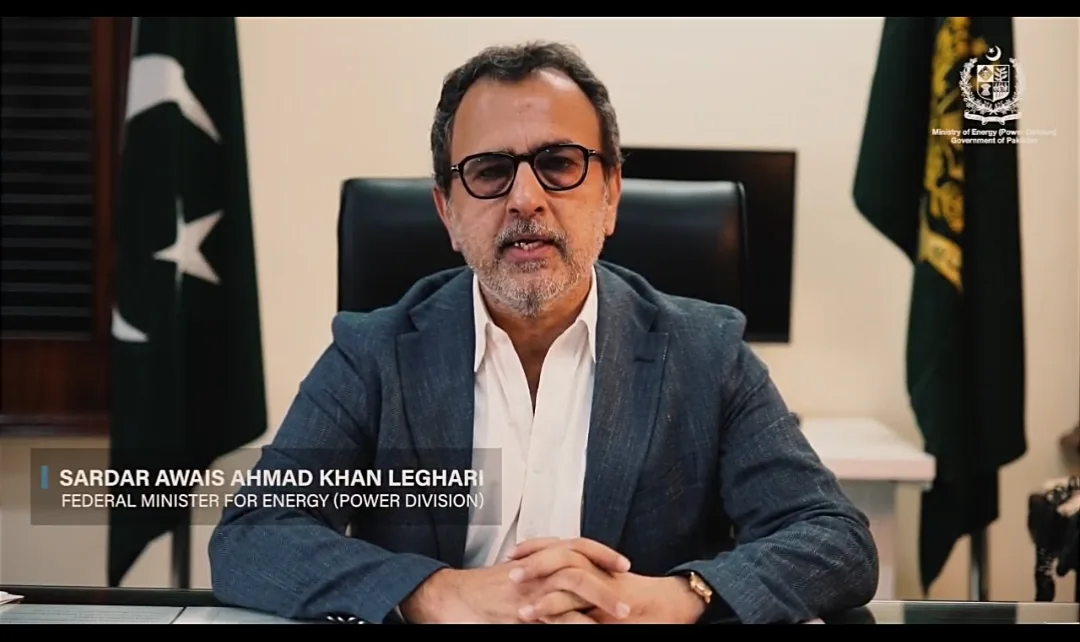
The federal government says it is out of the electricity buying business from today. Power Minister Awais Leghari, speaking to the media in Islamabad, said the government will no longer have the right to buy electricity from power producers or to require them to sell to it, and will no longer be able to force that electricity on consumers at government-set rates.
What actually changes, and for whom
Not your bill this month. The new trading system starts with large consumers: in the first phase, anyone drawing more than 1 megawatt can buy power directly from a generator on competitive terms. That is industry, large commercial users and big institutional loads, not a house in Johar Town.
The volumes are small to start with. Leghari said the government plans to auction 800 megawatts over five years, with 400 megawatts offered in the first phase. For scale, that is a fraction of national demand, which is the point of a pilot.
The minister said ordinary consumers would eventually be able to choose where they buy their electricity too, under the same market. No date was given for that phase.
Why it matters even if you are not a 1MW consumer
The complaint behind every electricity bill argument in Pakistan is capacity payments: the government contracted to buy power from independent power producers whether or not the power was used, and those contracts sit inside your per-unit rate. Leghari acknowledged that IPPs have become controversial and said the new market is meant to bring competition in their place.
If large industrial users move off the government's purchase book and onto direct contracts, the arithmetic behind the tariff changes. Whether that lands as a lower rate for households or as a smaller base to spread the same fixed costs across is the question, and nothing announced today answers it.
The bill you are actually getting
None of this touches the request already in front of the regulator. CPPA has asked NEPRA for Rs 1.73 a unit more under the monthly fuel charges adjustment, with the hearing set for 29 September. That one does hit household bills: the details and the hearing date are here.
Work out what your own bill comes to at the current slabs on the electricity bill calculator, and if you have been weighing panels, the solar payback calculator uses the current per-watt price.
What to watch
Three things will show whether this is a market or an announcement: the rules NEPRA issues for the first auction, whether any of the 400 megawatts actually clears at a price below the current industrial tariff, and what happens to the capacity payments already contracted. Until a generator and a factory sign a bilateral contract and the power flows, the old system is still the one sending you a bill.
This space is available. Advertise on Searchable, from Rs 3,000 a week.
Frequently asked questions
- Does this lower my electricity bill now?
- No. The first phase applies only to consumers drawing more than 1 megawatt. Household tariffs are unchanged, and CPPA's request for Rs 1.73 a unit more is still before NEPRA with a hearing on 29 September.
- How much electricity is being opened to competition?
- The government plans to auction 800 megawatts over five years, with 400 megawatts in the first phase.
Sources
- Govt Ends Forced Sales of Expensive Electricity: ProPakistani
More in Economy
Economy
Single gas tariff of Rs 1,708 per MMBtu from July 2027: protected slabs to end
The Petroleum Division has asked the IMF to approve one average gas price for everyone, with a Rs 162 billion BISP-style subsidy replacing the cheap protected slabs.
1d ago
Economy
Gold price in Pakistan today falls Rs 12,800 to Rs 438,136 per tola
24K gold dropped below Rs 440,000 a tola on 28 September as global prices slid with rising bond yields. Here is what a tola, 10 grams and the zakat nisab cost now.
2d ago
Economy
IMF talks: Aurangzeb meets mission, farm income tax targets questioned
The $1.2bn review moves to Islamabad as the IMF queries agricultural income tax. The FBR puts the war's tax cost at Rs 144 billion and vows to hit its Rs 3.053tr quarter target.
2d ago
Economy
Inflation rate in Pakistan for September seen at 10.25% to 10.75%, down from 11.1%
Topline Securities expects September CPI to ease slightly after August's jump. What that means for your grocery bill, your savings and the 11.5% policy rate before PBS reports on 1 October.
3d ago
Reader comments 0
No comments yet. Say something useful.