What Made-to-Order Changes for a Small E-commerce Brand in Pakistan
Printing after the order arrives cuts stock risk, but it moves the risk to supply, production and customer communication. A Karachi apparel brand on what changes.
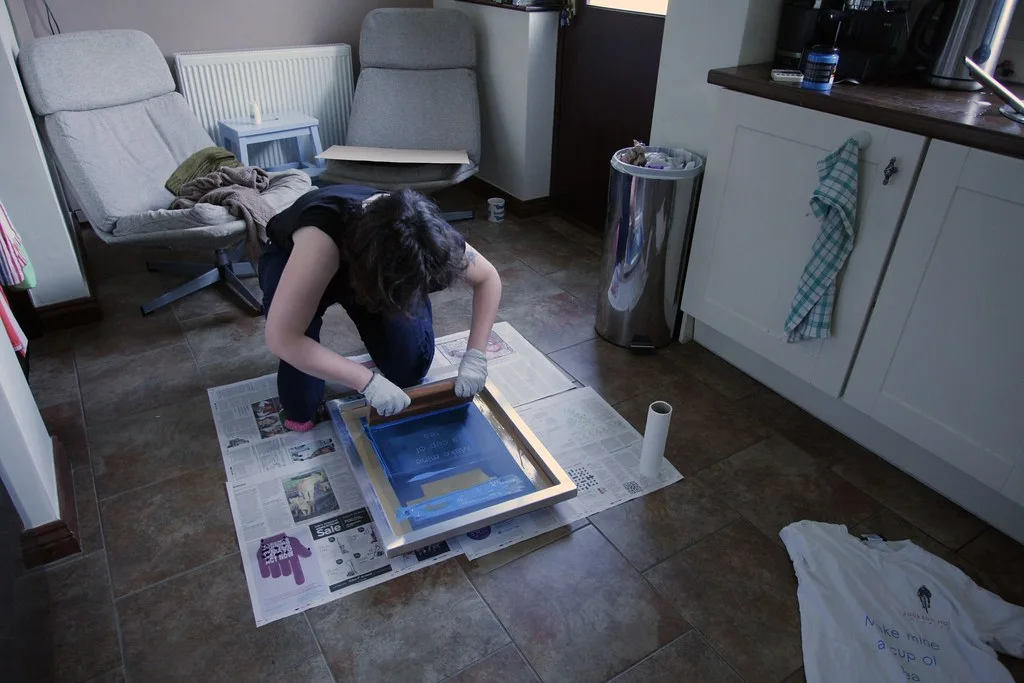
A guest article by Hadi Ahmed of Text Tease, a Karachi made-to-order apparel brand, drawing on how the brand runs. Searchable was not paid for it and edited it to our standards.
For a small apparel brand, inventory can become expensive long before it becomes useful. A conventional model asks the business to decide in advance which designs, colours and sizes customers will buy, produce stock around that guess, and then hope demand arrives in roughly the same shape.
Made-to-order reverses that sequence. The customer order comes first. Production follows.
That sounds simple, but it changes much more than storage. It affects product planning, design decisions, supplier dependence, cash flow, customer communication and even what information needs to appear on the product page.
Text Tease operates with a made-to-order model for graphic apparel. The biggest lesson has been that made-to-order does not remove operational risk. It moves the risk somewhere else.
Inventory risk becomes availability risk
The obvious advantage is that a small brand does not need to hold large quantities of finished products across every design and size. That matters because apparel inventory multiplies quickly. One design across several sizes is already multiple stock-keeping decisions. Add colours, cuts and additional designs, and a small collection can turn into a surprisingly large inventory commitment.
Made-to-order reduces that finished-goods exposure. But the trade-off is that the business becomes more dependent on the availability of blank garments and production capacity at the moment an order arrives.
A product may be available on the website while a particular garment size, colour or cut becomes temporarily difficult to source. The brand therefore needs tighter communication with production partners and better discipline around what it promises customers. The inventory problem has not disappeared. It has changed shape.
Product design has to respect production reality
Graphic apparel is not designed in a vacuum. A design may look excellent on screen and still become difficult to produce consistently because of print dimensions, garment construction, placement, colour or decoration method.
Made-to-order makes this especially important because each order may move through production individually rather than as part of one large manufacturing run. That forces design decisions to become more operational:
- Can the artwork be reproduced reliably on the selected garment?
- Does the print method suit the artwork?
- Does the available print area support the composition?
- Will the same design still work across different garment sizes?
- Is the selected garment consistently available?
These questions sound technical, but they affect the customer experience directly. A design that cannot be reproduced consistently is not really a finished product. For a small brand, creative ambition has to remain connected to production reality.
Cash is committed later
One of the strongest advantages of made-to-order is timing. Instead of committing cash to finished stock before knowing which product will sell, the business can commit much of the production expenditure after demand has already appeared.
That can make experimentation easier. A brand can test more design ideas without producing large quantities of each one in advance. Designs that attract little demand do not automatically become piles of unsold inventory. This is especially useful for graphic apparel, where creative variety can be part of the appeal.
The limitation is that made-to-order does not automatically mean better economics. Small production runs can have different cost structures from bulk production. Packaging, payment processing, production, customer service and fulfilment still matter. The business has to understand the economics of each order without relying on the purchasing efficiencies that come from large manufacturing quantities.
The model protects against one kind of waste. It does not excuse weak unit economics.
The product page becomes part of operations
In a stocked retail model, a customer often assumes the product already exists in a warehouse. Made-to-order requires slightly different expectation management. Customers need to understand what they are buying, how the garment fits, what the design looks like, and that production begins after the order is placed.
That means product information is not simply marketing copy. It reduces operational friction. Sizing needs to be clear. Garment type needs to be clear. Print placement needs to be represented accurately. Production and delivery expectations need to be communicated honestly. If those details are vague, the cost usually appears later through customer questions, dissatisfaction, cancellations or returns.
For Text Tease, that has made product-page accuracy part of the operating system rather than just the sales layer. A clever description cannot compensate for unclear sizing or misleading product visuals.
Fewer finished products does not mean fewer decisions
Made-to-order can appear simpler because there is less finished inventory. Operationally, it can require more attention at the individual-order level. Each order may involve confirming garment availability, matching the correct size and colour, checking the decoration requirements, sending the item into production and ensuring that fulfilment follows correctly.
The brand therefore trades warehouse complexity for coordination complexity. For a very small business, that can still be the better trade. Holding hundreds of finished items requires capital, storage and accurate demand forecasting. Coordinating production after a confirmed order requires process discipline.
One risk is financial. The other is operational. A small brand needs to decide which one it is better equipped to manage.
Customer expectations matter more than speed alone
Pakistani e-commerce customers have become accustomed to relatively fast order communication, even when fulfilment itself takes longer. That creates an important distinction. Customers may accept that a made-to-order product requires production time. What usually creates frustration is uncertainty:
- Has the order been received?
- Has production started?
- When is dispatch expected?
- Has the courier received it?
Clear communication can matter almost as much as reducing another day from the process. For made-to-order businesses, the goal should not be to pretend they operate like a warehouse full of finished stock. The goal should be to make the process predictable enough that the customer understands what is happening.
Returns need better information, not wishful thinking
Made-to-order does not eliminate returns or cancellations. Apparel still carries familiar problems: sizing, expectation gaps, colour perception, delivery issues and customers simply changing their minds.
The best defence begins before checkout. Accurate measurements, useful product images, realistic print representation and clear production expectations reduce avoidable misunderstandings.
There is also a temptation for small brands to publish impressive-looking return or cancellation statistics when discussing operations. That is rarely useful unless the data is properly tracked over a meaningful period. For a small operator, honest process information is more valuable than a percentage that creates false precision.
Made-to-order changes what a small brand can attempt
The real advantage is not simply that fewer shirts sit on shelves. It changes the range of ideas a small brand can afford to test.
A traditional inventory model encourages caution because every new design can become a stock commitment. Made-to-order allows creative experimentation with less finished-goods exposure. A design can exist commercially without first requiring a large production bet. That is particularly useful for brands built around graphics, cultural ideas or niche forms of self-expression, where the strongest products may not always be the easiest ones to forecast in advance.
The business still needs discipline. Products must be producible. Suppliers must be reliable. Customer expectations must be clear. Costs still have to work.
But the question changes from "How many of these should we manufacture before anyone buys one?" to "Can we build a system that produces this reliably when somebody does?"
For a small e-commerce brand, that can be a much more manageable question.
Useful next steps on Searchable
- Pricing a product with tax included: the sales tax calculator works out the tax inside a price or on top of it.
- Working out what the business owes: the income tax calculator covers salaried and business income for the current tax year.
- Getting found: small brands and shops can list their business free in the Searchable directory, with WhatsApp and phone enquiries going straight to them.
This space is available. Advertise on Searchable, from Rs 3,000 a week.
Frequently asked questions
- What is made-to-order in e-commerce?
- The product is produced after the customer orders it, instead of being manufactured in advance and held as stock. For apparel it usually means a blank garment is printed or finished once the order arrives.
- Does made-to-order remove inventory risk?
- It removes most of the risk of unsold finished stock, but it moves risk to availability: the right blank garment, size and colour and production capacity have to be there when the order arrives.
- How can a made-to-order brand reduce returns?
- Clear sizing and measurements, accurate product photos and print placement, and an honest production and delivery time before checkout, then updates when the order is received, produced and dispatched.
Still stuck? Ask the community: members and our desk answer questions about business every day.
More in Business

Business
PSX timings 2026: trading hours today, Friday sessions and holiday list
The Pakistan Stock Exchange opens at 9:32am and closes at 3:30pm Monday to Thursday, with two sessions on Friday. Every session, the Ramadan pattern and the 2026 holidays in one place.
4 min read
Reader comments 0
No comments yet. Say something useful.