India defend 32 against Japan in a five-over match: lowest total ever defended in T20
Rain cut the one-off T20I at Sano to five overs a side. India made 32 for 4, Japan finished on 30 for 3, and a reversed wide in the final over decided it.
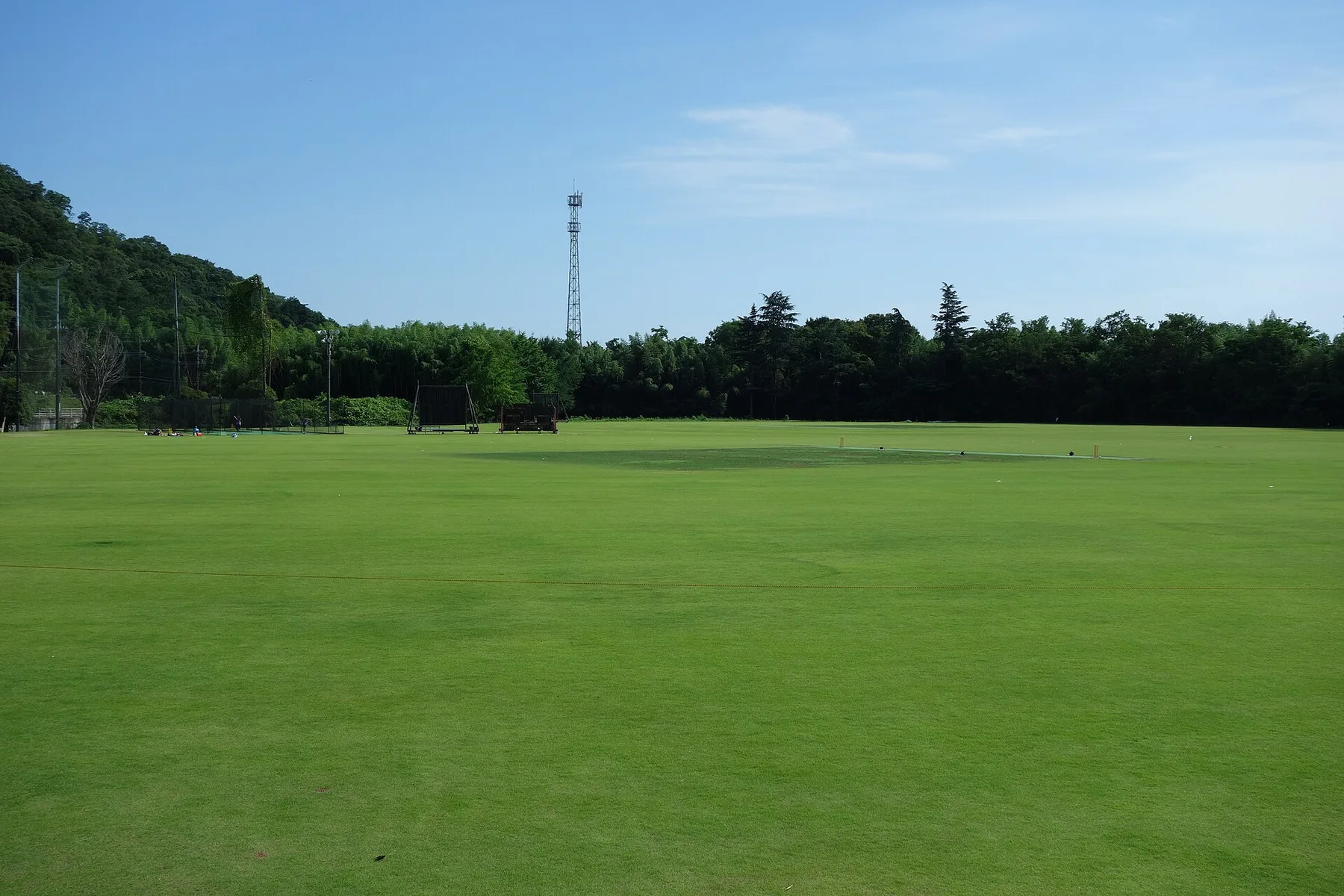
India beat Japan by two runs in a T20I at Sano on Tuesday that rain had cut to five overs a side. India made 32 for 4. Japan finished on 30 for 3. It is the lowest total ever defended in T20 cricket.
What happened in the last over
Japan needed eight off four balls. Left-hander Alexander Shirai-Patmore went for a reverse-hit off Axar Patel, missed, and the ball went past where his leg side would have been in a normal stance. The striker's end umpire, Chris Thurgate of Japan, called wide. Next ball, same shot, same call.
India protested. The square-leg umpire, Chris Brown of New Zealand and a member of the ICC Elite Panel, stepped in and asked Thurgate to reverse the second call. The equation went back to seven off three, and Japan fell two short.
Why the reversal was correct
The ICC's guidance to umpires is in the manual every official gets. If a batter attempts a reverse-hit or a switch-hit, both sides of the wicket are treated as off side for the purpose of judging a wide, so the ball has to be 75cm outside the outer stump to be called.
Two details people argued about on the night do not change it. It does not matter whether the batter changed grip (switch-hit) or kept it (reverse-hit): the guidance covers both. And it does not matter that the batter moved after the ball was released, because the guidance says the timing of the move makes no difference to the advantage gained.
There was no TV umpire and no DRS at Sano, so there was no review to call for. The on-field umpires sorted it between themselves, which is what the playing conditions allow.
Why it was 32 all the way
The pitch was what Shreyas Iyer called very difficult to bat on, a sticky dog: a surface with moisture in it that then gets sun. In five overs on that, 32 was a total. Japan captain Kendel Kadowaki-Fleming said emotions were running high afterwards, which is fair for a side that came within two runs of the biggest result in its cricket history.
For Pakistani readers the relevance is short and sharp: the wide rule that decided this match is the same one used in the PSL and in Pakistan's internationals, and it is the one most club umpires get wrong. If the batter reverses or switches, both sides are off side.
This space is available. Advertise on Searchable, from Rs 3,000 a week.
Frequently asked questions
- What is the lowest total defended in T20 cricket?
- India's 32 for 4 against Japan at Sano on 22 September 2026, in a match reduced to five overs a side. Japan finished on 30 for 3.
- Is a ball down the leg side a wide if the batter reverse-hits?
- No. ICC guidance treats both sides of the wicket as off side once a batter attempts a reverse-hit or switch-hit, so the ball must be 75cm outside the outer stump to be a wide. The timing of the batter's move does not matter.
Sources
More in Cricket
Cricket
ILT20 auction 1 October: Babar Azam among 17 Pakistanis, base price Rs 22 million
Babar, Fakhar and Naseem sit in the USD 80,000 top bracket in Dubai on Thursday. Here is every Pakistan player's base price in rupees and what each franchise can spend.
7h ago
Cricket
Pakistan vs England 2026: Buttler out injured, ODIs in Rawalpindi 20 Oct and Lahore 25 Oct
Jos Buttler misses the tour with a hamstring injury. Pakistan play England twice in the home ODI tri-series, with the final in Lahore on 31 October. Every date, venue and result.
3d ago
Cricket
Pakistan vs Sri Lanka 2026: schedule, venues and results, T20Is from 9 October
Every Pakistan vs Sri Lanka match this autumn in one place: three T20Is in Rawalpindi, two tri-series ODIs and two Tests. Updated with times, squads and results as they come.
3d ago
Cricket
Pakistan cricket schedule 2026-27: Sri Lanka and England at home from 9 October
Every Pakistan fixture announced for the 2026-27 season: the Asian Games quarter-final, three T20Is and two Tests against Sri Lanka, and an ODI tri-series with England. Updated as each series is added.
5d ago
Reader comments 0
No comments yet. Say something useful.