WHO calls this El Nino a public health threat: cholera, dengue and a late monsoon
The WMO says it is the strongest El Nino in 40 years of records, running into 2027. The WHO names cholera, malaria, dengue and chikungunya, and delayed monsoons in parts of Asia.
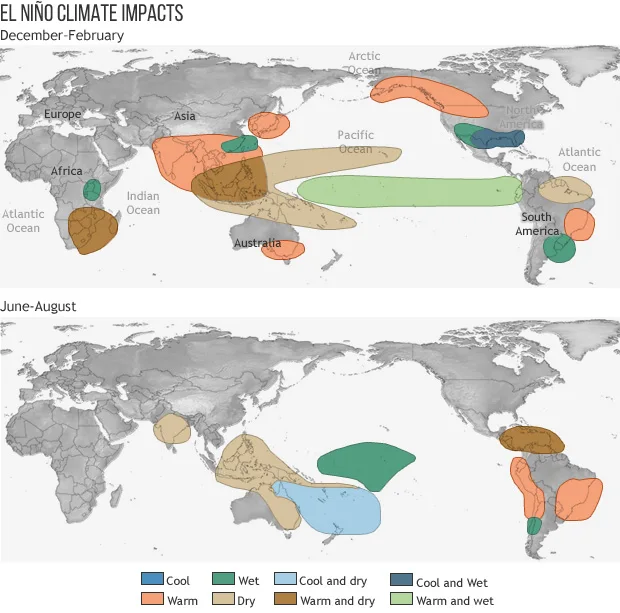
The World Health Organization has called the current El Niño a significant public health threat and a risk multiplier, as the World Meteorological Organization tracks what it describes as the strongest El Niño in 40 years of records, with effects running into 2027.
Teresa Zakaria, the WHO's unit head for risk reduction, said countries should act now to mitigate the impacts and avoid loss of life and suffering.
The diseases named
The WHO singled out four:
- Cholera, where heavy rainfall and flooding contaminate drinking water
- Malaria
- Dengue
- Chikungunya
The last three are mosquito-borne. Warmer, wetter conditions lengthen the breeding season and widen the area where the mosquito survives.
The regions named
Central America, Indonesia, southern Africa (drought) and parts of Asia, where the warning is delayed monsoons.
That last phrase is the one that matters here. Pakistan's water year and its crop calendar are built around the monsoon arriving roughly on time. A late or weak monsoon squeezes Kharif irrigation and pushes farmers onto tubewells, which costs diesel and electricity at exactly the point in the year when nobody has spare cash.
What this already looks like in Pakistan
Karachi recorded 41 degrees on Monday, its hottest September day in ten years. That is a single day and not by itself proof of anything, but it is the kind of reading that becomes more common in an El Niño year, and it lands in the month when dengue season normally peaks in Karachi, Lahore and Rawalpindi.
What actually reduces your risk
The health advice for a dengue-and-cholera year is dull and it works.
- Standing water. Empty coolers, plant saucers, roof tanks and construction pits weekly. Aedes mosquitoes breed in clean standing water, not drains.
- Screens and repellent at dawn and dusk, which is when Aedes bites.
- Drinking water. Boil or filter if the supply is interrupted or the line has been dug up nearby. Cholera risk rises when mains pressure drops and sewage gets in.
- Fever that lasts more than two days with body aches gets a blood test, not a guess. Dengue is confirmed by a lab, and the dangerous phase is when the fever falls.
The cost side
A hotter, longer summer means more hours of air conditioning and a bigger bill under the slab system, where crossing a unit threshold reprices your whole consumption. Work out what a unit of cooling costs you on our AC running cost calculator, and check the bill itself against the current tariff on the electricity bill calculator.
This space is available. Advertise on Searchable, from Rs 3,000 a week.
Frequently asked questions
- What diseases does the WHO link to El Nino?
- Cholera, spread when flooding contaminates drinking water, and three mosquito-borne diseases: malaria, dengue and chikungunya.
- How long is this El Nino expected to last?
- The World Meteorological Organization says effects will continue into 2027. It describes the event as the strongest in 40 years of records.
Sources
More in Science

Science
Pakistan's first astronaut: China to pick Zeeshan Ali or Khurram Daud in October
One of two Pakistani pilots training in Beijing will spend a week on China's Tiangong station running four experiments from Pakistani universities. The choice is due mid-to-late October.
2d ago
Science
Y chromosome loss found in healthy tissue near tumours in 11 organs
A University of Arizona team looked at 4.3 million cell nuclei from 405 men and found the Y chromosome missing in normal-looking tissue next to cancers, not just in the tumours.
21 Sept 2026
Science
Pakistan climbs 22 places to 157th of 177 on the 2026 environment index
Yale's Environmental Performance Index scores Pakistan at 29.03, up from 179th in 2024. The rank moved. The air in Lahore has not, yet.
19 Sept 2026

Science
NASA finds the Moon's biggest new crater in 17 years, 222 metres wide
The McGetchin impact site opened up between April and May 2024. Craters this size form on the Moon roughly once every 132 years.
17 Sept 2026
Reader comments 0
No comments yet. Say something useful.