Japan's MMX Mars moon mission launches at 12:41am PKT on Tuesday to bring back Phobos soil by 2031
JAXA's H3 rocket lifts off from Tanegashima on the first round trip to the Martian system. The probe will land on Phobos and bring home at least 10 grams of it.
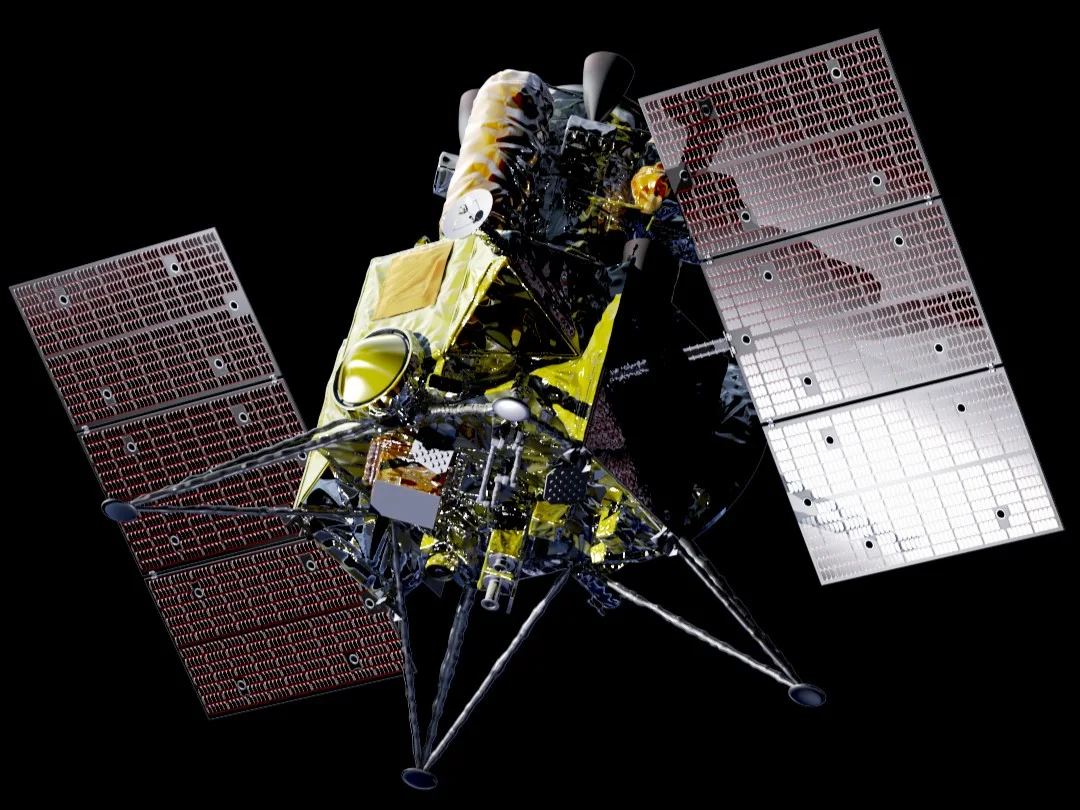
Japan's space agency JAXA will launch its Martian Moons eXploration (MMX) probe at 4:41am Japan time on Tuesday 20 October, which is 12:41am PKT (late on Monday night in Pakistan), Dawn reported. If it works, MMX will be the first mission to make a round trip to the Martian system and bring material from a Mars moon back to Earth.
Launch details
| Rocket | H3, Japan's flagship launcher |
| Site | Tanegashima Space Center, southern Japan |
| Time | Tuesday 20 October, 4:41am JST (12:41am PKT) |
| Window | Open until 7 November, Space.com reported |
The mission was meant to fly in 2024 but was held back by problems with the H3 rocket. Earth and Mars line up for launches only about once every 26 months, so the delay cost two years.
The plan, step by step
- About a year to reach Mars.
- Up to three years around Phobos, studying both moons: Phobos, about 22 km across, and Deimos, about 12 km. MMX will observe Deimos but not land on it.
- A small rover goes first. IDEFIX, a 25 kg rover built by France's CNES and Germany's DLR, will look at the surface to help make the landing safe.
- Landing and sampling. The probe will touch down on Phobos and collect at least 10 grams of surface material.
- Home in 2031. It leaves Mars in 2030 and its sample capsule reaches Earth about a year later.
"Going deep into what we call the 'gravity well' is difficult," project manager Yasuhiro Kawakatsu said, according to Dawn.
Why Phobos matters
Scientists still do not know whether Mars's two moons were knocked off Mars by a giant impact or are asteroids that Mars captured. The sample should settle that, and help explain how water and organic material reached the inner planets, including Earth. JAXA also sees Phobos as a possible "natural space station" for future crewed missions to Mars.
NASA, the European Space Agency and about 20 universities and companies are also part of the mission.
When to look up the launch
In Pakistan the launch falls just after midnight, at 12:41am on Tuesday. If the weather or a technical problem holds it back, the window stays open until 7 November. For more space and science news, see our science desk.
Frequently asked questions
- When does Japan's MMX launch in Pakistan time?
- At 12:41am PKT on Tuesday 20 October 2026 (4:41am Japan time), from Tanegashima Space Center on an H3 rocket.
Sources
More in Science

Science
Up to 40.5 million people in South Asia may be forced to move by 2050 as the climate heats up, IOM says
The UN migration agency's head, Amy Pope, said in New Delhi that funding for resilience is inadequate and urged early-warning data and AI forecasting to protect communities before disasters hit.
1d ago

Science
Invictibellatrix amberina: fossil kept in a London museum drawer for 100 years is a new T. rex relative
A tiger-sized, long-clawed predator from 120 million years ago was hiding in the Natural History Museum's stores since 1924.
3d ago
Reader comments 0
No comments yet. Say something useful.