Short heatwaves melt glaciers faster than models assumed, adding 5-10% to sea-level rise
A daily-weather glacier model run on 12,500 glaciers finds today's projections too low. Here is what it means for the 3,044 glacial lakes in Gilgit-Baltistan and KP.
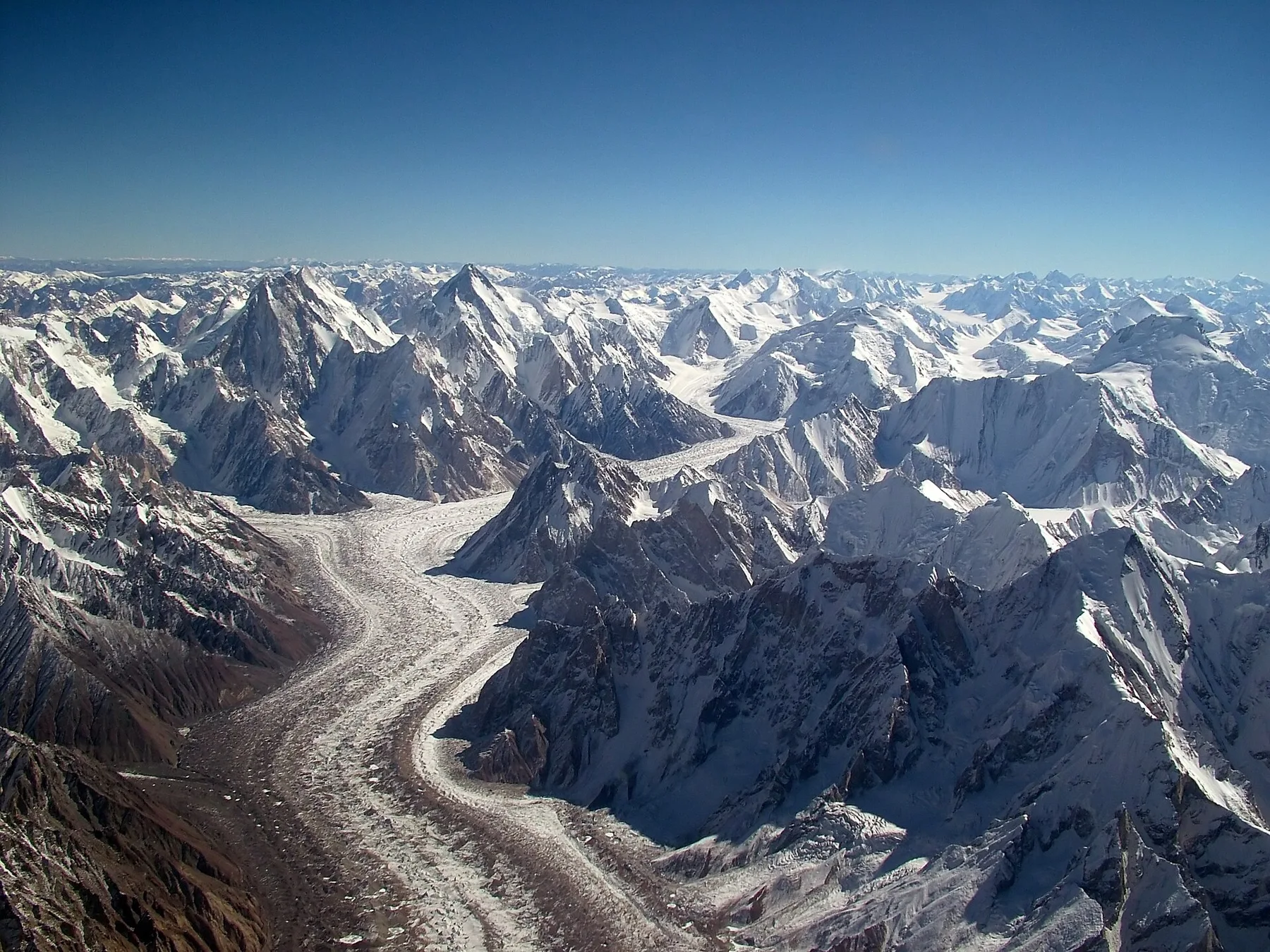
Glaciers will add 5% to 10% more to sea-level rise this century than today's standard models predict, because those models smooth out the short heatwaves that do much of the melting. That is the finding of a study published on 19 October 2026 in Nature Communications, and it matters for the glaciers in Pakistan, which feed the Indus and hang above thousands of glacial lakes in the north.
What the glacier study found
A team led by Lander Van Tricht of ETH Zurich, with co-supervisor Harry Zekollari of the Vrije Universiteit Brussel, rebuilt the Global Glacier Evolution Model (GloGEM) so it runs on daily weather instead of monthly averages, the university said in a release carried by Phys.org.
- They ran it on more than 12,500 glaciers, which hold 94% of the world's glacier ice.
- The daily model matched observed ice loss better than the monthly one, especially in record melt years.
- Run to 2100, it projects a 5% to 10% larger glacier contribution to sea-level rise.
- It also shifts when and how fast meltwater runs off, with knock-on effects for the rivers people downstream depend on.
"Glaciers don't respond to monthly averages, but to the weather they experience every single day," Van Tricht said. "A heat wave lasting only a few days can cause enormous amounts of ice to melt."
Why a few hot days make such a difference
A monthly average can look mild even when it hides a week of extreme heat. The researchers point to recent extreme melt years: the European Alps in 2022 and again in 2026, western North America in 2023, Svalbard in 2024 and Central Asia in 2025. In each, short spells of heat stripped far more ice than a monthly model would expect.
"Glaciers are an important source of freshwater for millions of people," Zekollari said, which is why the timing of melt matters as much as the total.
What it means for glaciers in Pakistan
The study does not give separate figures for the Karakoram, Hindu Kush or Himalaya, but its message applies there: heatwaves, not averages, drive the worst melting. Pakistan's north already lives with the result.
According to the UNDP's GLOF-II project, run with Pakistan's climate ministry:
| Northern Pakistan (GB and KP) | Figure |
|---|---|
| Glacial lakes | 3,044 |
| Lakes judged hazardous | 33 |
| People at risk from outburst floods | about 7.1 million |
| Weather stations installed | 50 |
A glacial lake outburst flood (GLOF) happens when water held back by ice or loose rock breaks through. A model that finds more of the melt packed into short hot spells is a warning that these lakes can fill faster than averages suggest.
What people in the north can do
- Follow the alerts. The GLOF-II early-warning network of weather stations and river gauges covers 12 districts of Gilgit-Baltistan and Khyber Pakhtunkhwa; take local warnings seriously in hot spells.
- Know your high ground. Families in valleys below glacial lakes should agree in advance where to go if a warning comes at night.
- Watch the heat, not the season. The study's lesson is that three or four very hot days can matter more than a warm month.
Frequently asked questions
- How many glacial lakes are there in northern Pakistan?
- UNDP's GLOF-II project counts 3,044 glacial lakes in Gilgit-Baltistan and Khyber Pakhtunkhwa, of which 33 are judged hazardous, with about 7.1 million people at risk.
- Why do daily glacier models show more melting?
- Monthly averages hide short heatwaves. A model run on daily weather captures those few very hot days, which melt large amounts of ice, and projects a 5% to 10% larger glacier contribution to sea-level rise this century (Nature Communications, 19 October 2026).
Sources
- Resolving short-term meteorological variability amplifies projected glacier loss and sea-level rise: Nature Communications
- Factoring daily weather extremes into glacier models reveals greater ice loss and faster sea-level rise: Phys.org (Vrije Universiteit Brussel)
- Scaling-up of GLOF risk reduction in Northern Pakistan (GLOF-II): UNDP
More in Science

Science
Amelia Earhart search: Nikumaroro 'plane debris' was a clump of trees, Purdue team says
A 2020 satellite image raised hopes that Earhart's lost Lockheed Electra lay in a Pacific lagoon. Archaeologists found trees, a carbonate shine and one steel tube.
1d ago

Science
Japan's MMX launches at 12:41am PKT to bring Mars moon Phobos soil home by 2031
The H3 rocket flew as planned from Tanegashima and the probe is in its planned orbit. Here is what happens between now and the sample's return in 2031.
2d ago

Science
Up to 40.5 million people in South Asia may be forced to move by 2050 as the climate heats up, IOM says
The UN migration agency's head, Amy Pope, said in New Delhi that funding for resilience is inadequate and urged early-warning data and AI forecasting to protect communities before disasters hit.
3d ago
Reader comments 0
No comments yet. Say something useful.