Saudi East-West pipeline hit near Medina a day after Houthis struck Aramco's Riyadh tower
A limited fire, no injuries and oil still flowing, Saudi state media says. Pakistan's Foreign Office condemned the Riyadh attack. What it means for Pakistanis in the kingdom.
Update, Monday 9 November: East-West pipeline hit near Medina, Pakistan condemns Riyadh attack
Updated 9 November 2026, 11pm PKT. A day after the KAFD strike, Saudi Arabia's East-West oil pipeline was struck in the Medina region, state media reported on Monday, citing an energy ministry source. The attack started a limited fire that has been put out, with no deaths or injuries, and pipeline operations were not affected, Business Recorder reported, carrying Reuters. No group had claimed it at the time of the report.
Why this pipeline matters: the 1,200km line carries crude across the peninsula to Yanbu on the Red Sea. Since the Strait of Hormuz was disrupted, Riyadh has sent about 4 million barrels a day through it, roughly 4% of world supply. It was shut for several days in September after drone attacks that Saudi Arabia blamed on Iraqi militias. A lasting outage would hit the oil price that sets Pakistan's fortnightly fuel review; for now operations are normal, and our petrol price page tracks the pump price.
Pakistan's response: the Foreign Office said on Monday that Pakistan "strongly condemns" the attempted Houthi attack on the Aramco building in Riyadh, called the targeting of civilian facilities a "reckless disregard" for human life and demanded that the Houthis "unconditionally" stop all attacks on Saudi Arabia, The Express Tribune reported. It said the kingdom's security is "of paramount importance to Pakistan".
The KAFD attack on Sunday 8 November
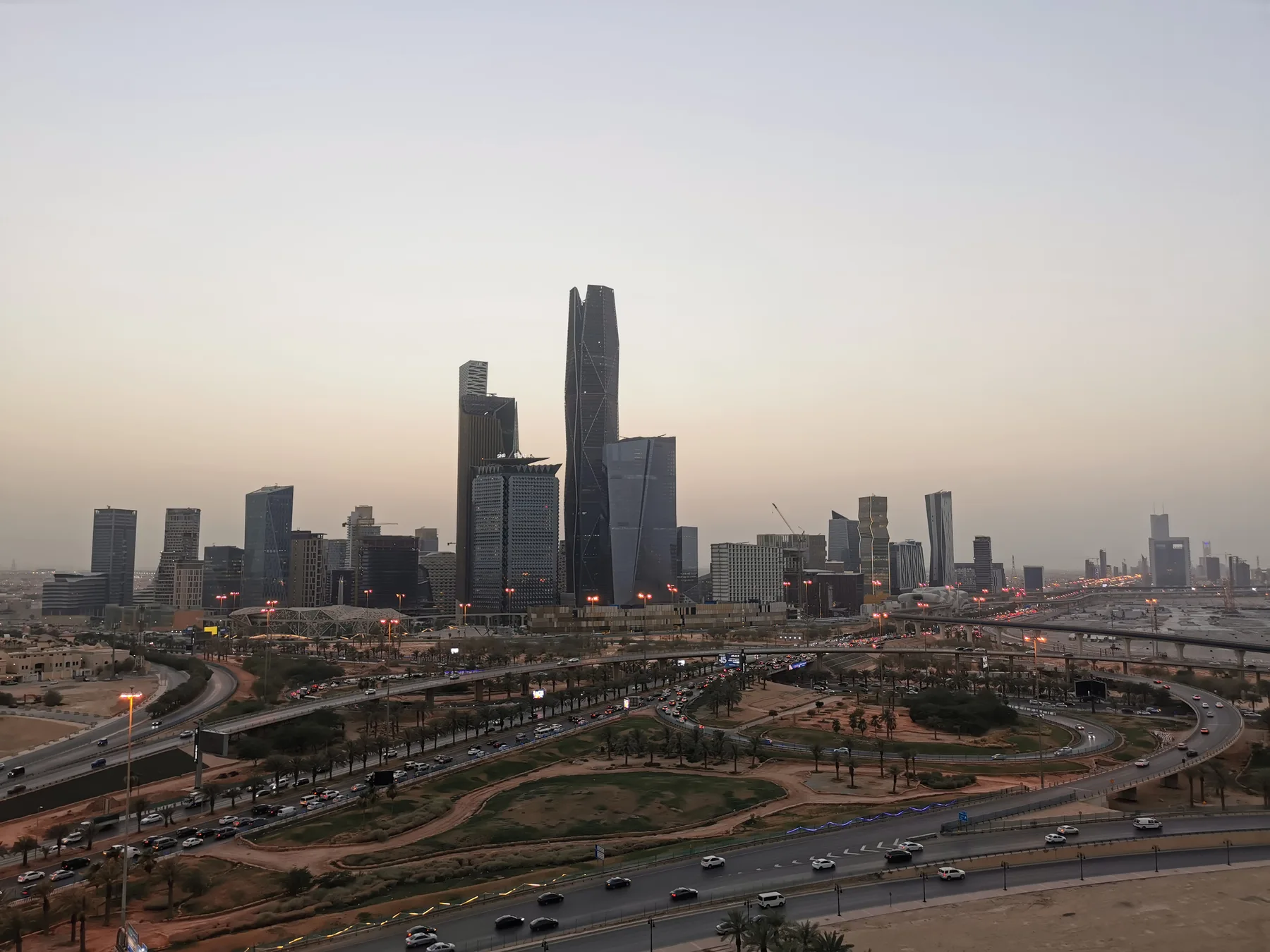
An Aramco administrative building in Riyadh's King Abdullah Financial District (KAFD) was damaged on Sunday 8 November when the Houthis fired missiles and drones at the Saudi capital, the first time the group has reached the district that houses the Saudi stock exchange and the Public Investment Fund. Saudi Arabia's energy ministry said falling shrapnel caused "minor damage" and that no one was hurt, Dawn reported, carrying AFP.
What happened in Riyadh on 8 November
- The target: the energy ministry said "an administrative building belonging to Saudi Aramco in Riyadh was subjected to an attempted attack". Eyewitnesses told AFP it was the Aramco tower in KAFD, and two more witnesses confirmed damage to the skyscraper.
- The interceptions: coalition spokesman Turki al-Malki said on Sunday morning that air defences "intercepted and destroyed two ballistic missiles" fired at Riyadh. Loud explosions were heard across the city.
- Casualties: none, the ministry said.
- The Houthi claim: the group said it carried out four operations with ballistic and cruise missiles and drones, naming the financial centre, Riyadh airport, Aramco oil storage tanks and Abqaiq in the Eastern Province as targets. Saudi officials did not confirm damage at those other sites.
The attack came hours after Saudi Arabia's education ministry announced late on Saturday that in-person schooling would resume in Riyadh, AFP reported.
Why KAFD matters
KAFD is Riyadh's business district: the Public Investment Fund's headquarters, the Saudi exchange (Tadawul) and a metro station that is crowded with commuters in the morning. AFP described any attack on it as "a major escalation", since earlier Houthi strikes had gone mainly for airports, oil plants and military sites.
How it compares with the last month
This is the second hit on an Aramco office tower in under four weeks. On 14 October a missile struck Aramco's headquarters tower in Dhahran (our report). Since then the Houthis have claimed a strike on Saudi Arabia's largest refinery, which pushed Brent crude up 1.4% to $115.47 (our report), missiles aimed at Taif and Yanbu were intercepted, and debris fell in Makkah, after which Pakistan's Foreign Office called the attacks a "grave violation" of Saudi sovereignty (our report). Pakistan and Saudi Arabia are bound by two defence pacts, one of which also includes Turkiye.
What it means for Pakistanis in Riyadh
Saudi Arabia is home to the largest Pakistani community abroad and is the biggest single source of remittances. Nothing in Sunday's statements changed travel, work or school rules, and the Saudi side reported no casualties. For families:
- Follow official alerts only: the Saudi civil defence and the Pakistan Embassy in Riyadh are the sources to trust, not forwarded clips.
- Schools: Riyadh's return to in-person classes was announced before the attack; check your school's own notice before the morning run.
- Sending money home: the riyal rate is on our SAR to PKR page, updated through the day, and the currency converter works out any amount.
We will update this story if Saudi authorities report further damage or change any advisory.
Frequently asked questions
- Was anyone hurt in the Houthi attack on the Aramco building in Riyadh?
- No. Saudi Arabia's energy ministry said falling shrapnel caused minor damage to the building and that no injuries or deaths were reported.
- Where is the Aramco building that was hit?
- Witnesses told AFP it was the Aramco tower in the King Abdullah Financial District (KAFD) in Riyadh, the district that also houses the Saudi stock exchange and the Public Investment Fund.
- Was Saudi Arabia's East-West pipeline damaged?
- State media said on 9 November that the pipeline was struck in the Medina region, causing a limited fire that was put out. No one was hurt and pipeline operations were not affected.
Sources
- Aramco skyscraper damaged as Houthis target Riyadh financial district (AFP): Dawn
- Aramco Building in Riyadh Damaged in Houthi Attack: ProPakistani
- Saudi East-West oil pipeline hit in Medina region, state media reports (Reuters): Business Recorder
- Pakistan condemns Houthi attack on Saudi Aramco building: The Express Tribune
Related reading
World
Kuwait airport bans all photos, videos and live streaming: what Pakistani travellers need to know
Circular No. 60 of 2026 from Kuwait's civil aviation authority covers terminals, security checks and aircraft, takes effect at once and carries prosecution for anyone who breaks it.
4d ago

World
Melania Trump hosts Russian and Ukrainian officials at White House, calls for a lasting truce after Oleshky ceasefire
A rare meeting between the two warring sides came days before US, Russia and Ukraine meet in Abu Dhabi. Ukraine gave the US first lady a national honour.
4d ago
Reader comments 0
No comments yet. Say something useful.