Dying Sun could break up the outer solar system billions of years sooner than thought
A new study finds the Sun's uneven death throes may scatter Jupiter, Saturn, Uranus and Neptune within about a billion years of it becoming a white dwarf.
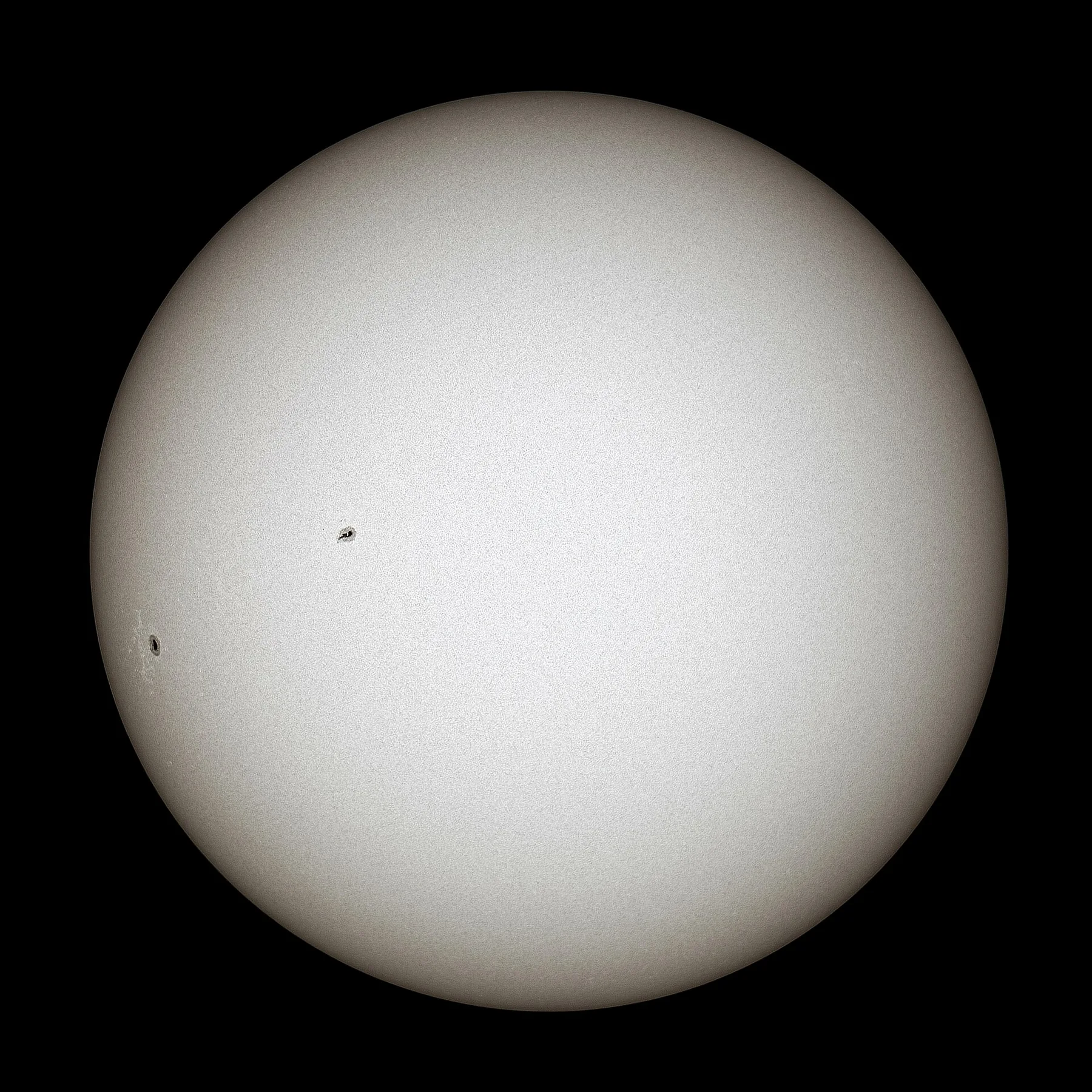
The outer planets of our solar system may be thrown into chaos about a billion years after the Sun dies, not the near-endless time astronomers had assumed, according to a new study by Konstantin Batygin, Jim Fuller and Fred C. Adams published in The Astrophysical Journal Letters and posted as a preprint on arXiv. Euronews reported that the work comes from researchers at Caltech in the United States.
None of this touches anyone alive: the Sun has roughly five billion years left before it swells into a red giant, Euronews noted. But the result rewrites one of the oldest questions in astronomy, how long the planets' orbits stay stable.
The old answer and the new one
| Earlier estimate | New study | |
|---|---|---|
| Outer planets' own orbital lifetime | about 10^18 years (a billion billion) | about 1 billion years after the Sun becomes a white dwarf |
| Break-up from passing stars | over roughly 100 billion years | not needed to cause chaos |
| Simulations disrupted before the white dwarf forms | not expected | about 40% |
| Simulations that self-destruct within 3 billion years | not expected | about 90% |
Why the dying Sun matters
Earlier models treated the Sun's death as smooth: as a red giant it slowly sheds its outer layers, gravity weakens, and Jupiter, Saturn, Uranus and Neptune drift calmly outward. The authors argue it is not that tidy. White dwarfs, the dense cores dying stars leave behind, are seen moving with a recoil that suggests their mass was thrown off unevenly. The team modelled that as a series of separate, randomly aimed ejections, each giving the Sun a small kick.
Each kick nudges the planets' orbits, and over many kicks those orbits wander in a random walk. In the team's computer runs of the four giant planets, orbits began to cross while the Sun was still a red giant. Their conclusion is that the outer solar system's lifetime shrinks from about 10^18 years to around one billion years after the white dwarf forms.
What it means for Earth and Mars
Earth's fate does not change: Mercury, Venus and probably Earth are expected to be swallowed as the Sun expands, Euronews reported, while Mars may sit far enough out to escape. The new study is about what happens next to the giant planets, which were thought to survive in wider orbits almost forever.
How sure is it?
The result depends on how lumpy the Sun's mass loss really is, which no one can watch happen to our own star. The authors chose values they say are consistent with the observed movement of white dwarfs. It is a modelling study, so expect other teams to test it.
For a sense of scale, use our age calculator on your own birthday: even a full human lifetime is less than one ten-millionth of the billion years in question.
Frequently asked questions
- When will the outer solar system become unstable?
- A 2026 study by Batygin, Fuller and Adams finds the orbits of the giant planets could become chaotic about one billion years after the Sun becomes a white dwarf, far sooner than the 10^18 years earlier estimated. The Sun has about five billion years before it becomes a red giant.
Sources
- Terminal instability of the Solar System triggered by stochastic solar mass loss (Batygin, Fuller, Adams; arXiv 2609.12494, 11 Sep 2026): arXiv
- Terminal Instability of the Solar System Triggered by Stochastic Solar Mass Loss: The Astrophysical Journal Letters
- The solar system will fall apart far sooner than anyone thought, scientists say (2 Oct 2026): Euronews
More in Science
Science
James Webb finds water clouds that thicken and thin on WISE 0855, the coldest brown dwarf known
Eleven hours of Webb data show patchy water clouds and rising carbon monoxide on a Jupiter-sized object 7.5 light-years away, colder than a Murree winter night.
2d ago

Science
Margaret Hamilton, who wrote the Apollo moon landing software, dies at 90
MIT says the computing pioneer died on 30 September. Her code kept Apollo 11 on track minutes before Eagle touched down in 1969.
4d ago
Science
Pakistan's first astronaut: China to pick Zeeshan Ali or Khurram Daud in October
One of two Pakistani pilots training in Beijing will spend a week on China's Tiangong station running four experiments from Pakistani universities. The choice is due mid-to-late October.
28 Sept 2026
Reader comments 0
No comments yet. Say something useful.