Super El Nino sets a Pacific heat record: 2026 could be the hottest year ever, says Copernicus
Sea temperatures in the key Nino3.4 zone reached 29.70C in September, above the 1997-98 and 2015-16 peaks, and the EU monitor says 2026 and 2027 could both break records.
El Nino hits an all-time high
El Nino set an all-time temperature record in the Pacific in September, and it could make 2026 the hottest year on record, the director of the EU's Copernicus Climate Change Service said on Monday 12 October, AFP reported via ARY News.
Sea surface temperatures in Nino3.4, the patch of the central Pacific that forecasters watch to measure El Nino, reached 29.70C, above the peaks of the strong El Nino events of 1982-83, 1997-98 and 2015-16. The record has fallen before this El Nino's expected peak later in the year.
The numbers
- 29.70C: Nino3.4 sea temperature in September, an all-time high.
- 21.05C: global average sea surface temperature in September, a record for the month (the previous high was 20.92C in September 2023).
- 16.27C: average global surface air temperature in September, the second hottest September on record.
- 1.63C: how much warmer September was than the 1850-1900 average. It was the second month in a row above 1.5C.
Is it the strongest El Nino ever?
Not yet, by Copernicus' own measure. Director Carlo Buontempo called this El Nino, which emerged in June, "very exceptional", but said it is too early to call it the strongest ever. Because the oceans are warmer overall, older and newer events are hard to compare, so Copernicus now uses an index that adjusts for that warming, and on that index the current event is not yet stronger than past ones. Japan's weather agency said on Friday that El Nino had reached its "strongest intensity on record" on its own scale.
Buontempo said that if past patterns repeat, the world "may have a record-breaking 2026, followed by a record-breaking 2027", because El Nino usually lifts global temperatures most in the year after its peak. He added that El Nino is not the root cause: the long-term rise comes from greenhouse gas emissions.
What El Nino is
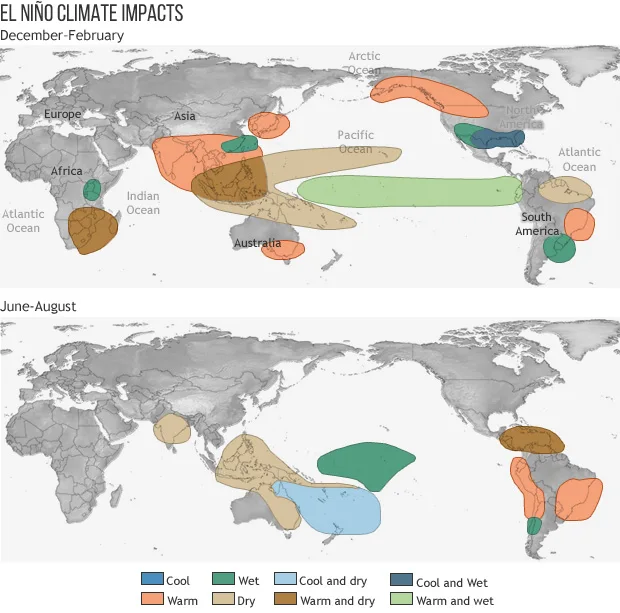
El Nino is the warm phase of a natural cycle in the tropical Pacific that returns every two to seven years and lasts about nine to 12 months. It shifts weather patterns around the world, raising the risk of drought in some regions and floods in others, on top of man-made warming.
What it means for Pakistan
Pakistan has lived through deadly heatwaves and floods in recent years, so a record-warm world matters here too. The Pakistan Meteorological Department issues its own seasonal outlooks, and those, not global averages, decide local advisories. Hotter months also mean heavier air-conditioner use: our AC running cost calculator shows what that adds to a power bill.
Frequently asked questions
- Will 2026 be the hottest year on record?
- Copernicus director Carlo Buontempo said on 12 October 2026 that if past patterns hold, 2026 may be a record year, followed by a record 2027.
Sources
- Super El Nino could make 2026 record hottest year: climate monitor (AFP, 12 Oct 2026): ARY News
- Climate bulletins: Copernicus Climate Change Service
More in Science
Science
James Webb finds water clouds that thicken and thin on WISE 0855, the coldest brown dwarf known
Eleven hours of Webb data show patchy water clouds and rising carbon monoxide on a Jupiter-sized object 7.5 light-years away, colder than a Murree winter night.
1d ago

Science
Margaret Hamilton, who wrote the Apollo moon landing software, dies at 90
MIT says the computing pioneer died on 30 September. Her code kept Apollo 11 on track minutes before Eagle touched down in 1969.
3d ago

Science
Pakistan's first astronaut: China to pick Zeeshan Ali or Khurram Daud in October
One of two Pakistani pilots training in Beijing will spend a week on China's Tiangong station running four experiments from Pakistani universities. The choice is due mid-to-late October.
28 Sept 2026
Science
WHO calls this El Nino a public health threat: cholera, dengue and a late monsoon
The WMO says it is the strongest El Nino in 40 years of records, running into 2027. The WHO names cholera, malaria, dengue and chikungunya, and delayed monsoons in parts of Asia.
22 Sept 2026
Reader comments 0
No comments yet. Say something useful.